
Mod5 Bus Shelter Raleigh
Mod5 Bus Shelter Raleigh
Project Type: Urban Furniture
Location: Raleigh, USA
Competition: AIA North Carolina Bus Shelter Design
Organiser: Raleigh Transit Authority & AIA Triangle
Exhibition: CAM Raleigh
Architect: Perkins+Will
Year: 2016
Status: Prototype
Website: GoRaleigh Bus Shelter
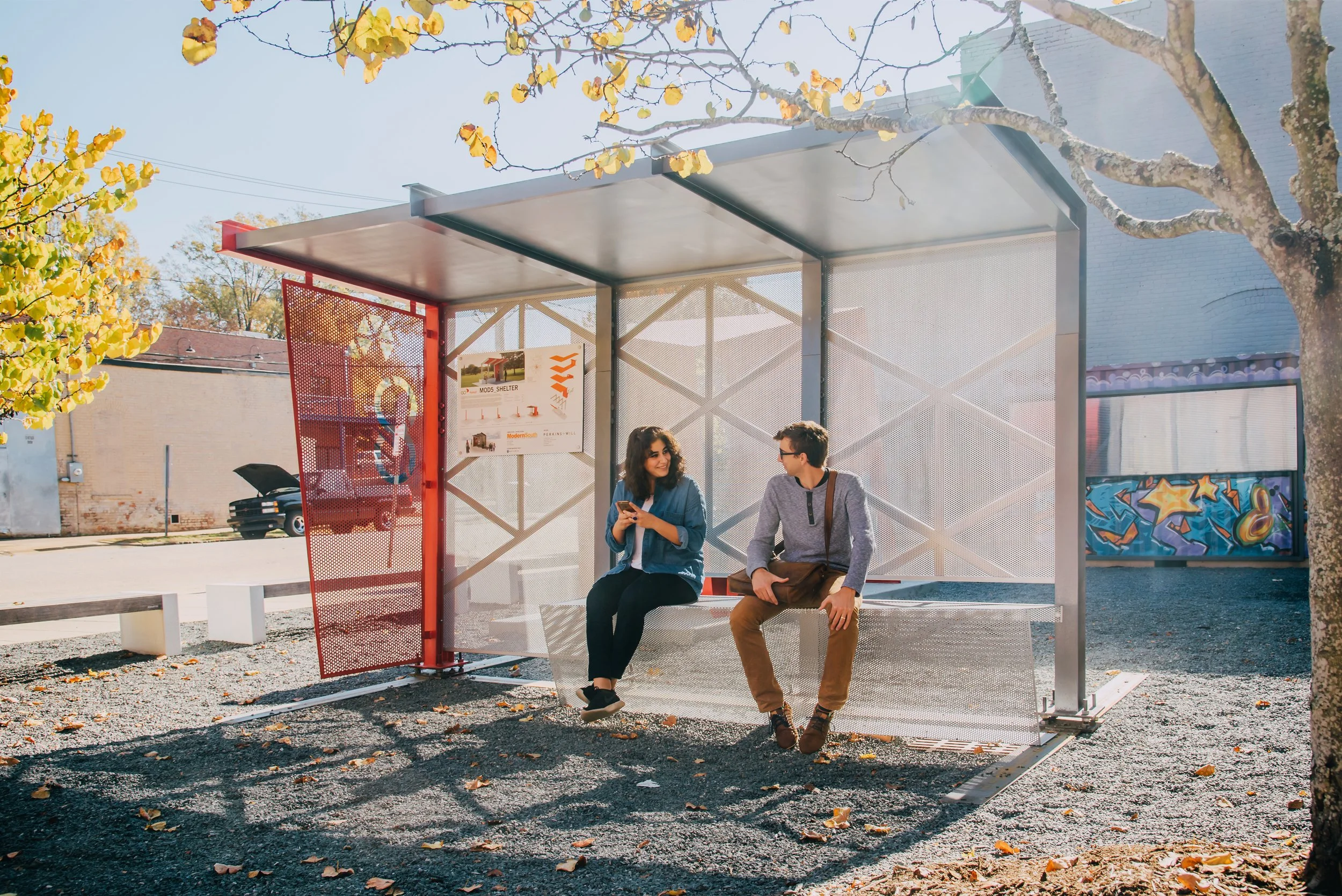
As a city quickly expanding as a result of technological opportunities and advancements, Raleigh continues to grow and develop over a large geographical area. This steady and continued growth relies on public transportation as a critical means of establishing connectivity throughout this geographical area, while offering additional transit options as people continue to look beyond personal automobiles for primary transportation.
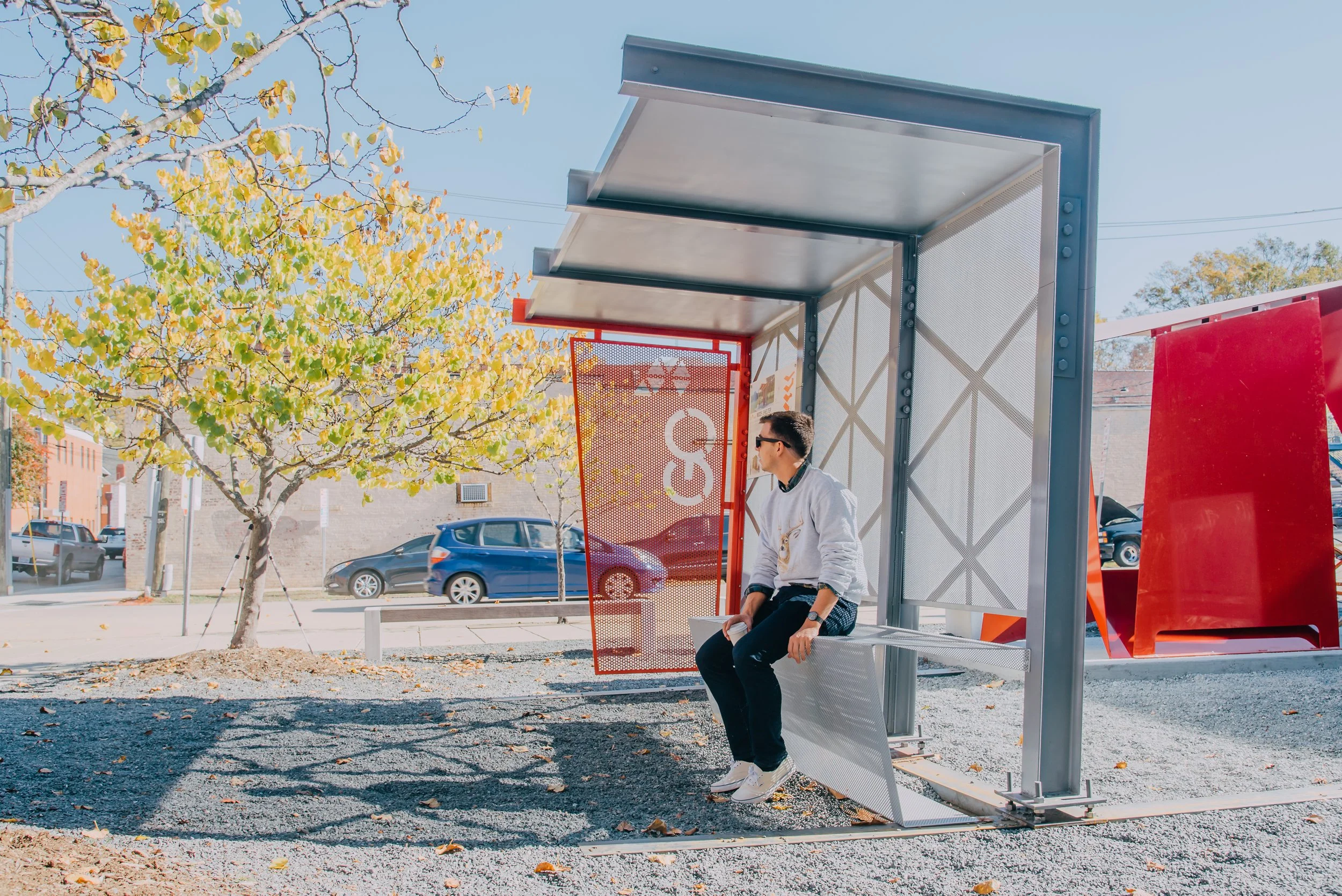
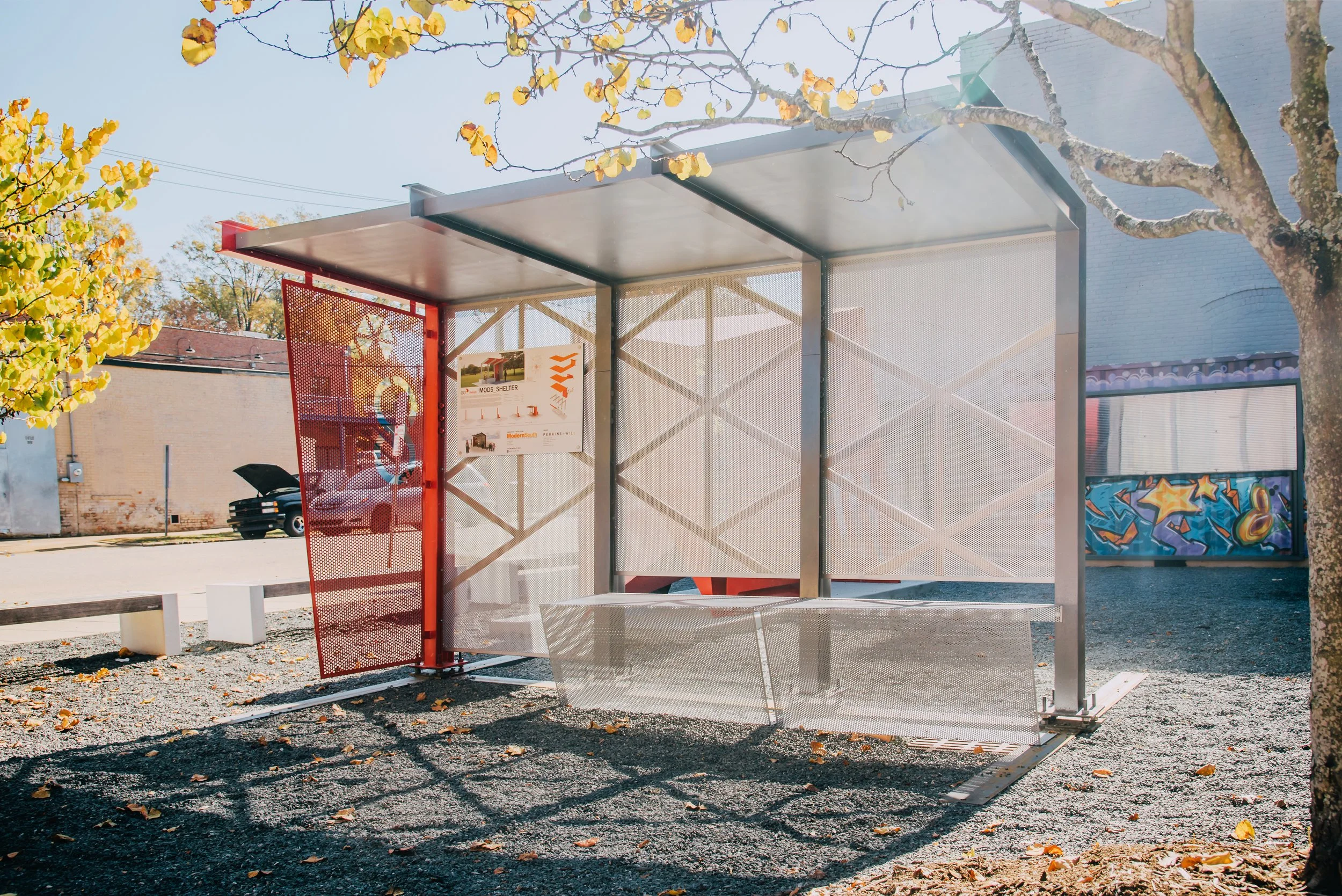
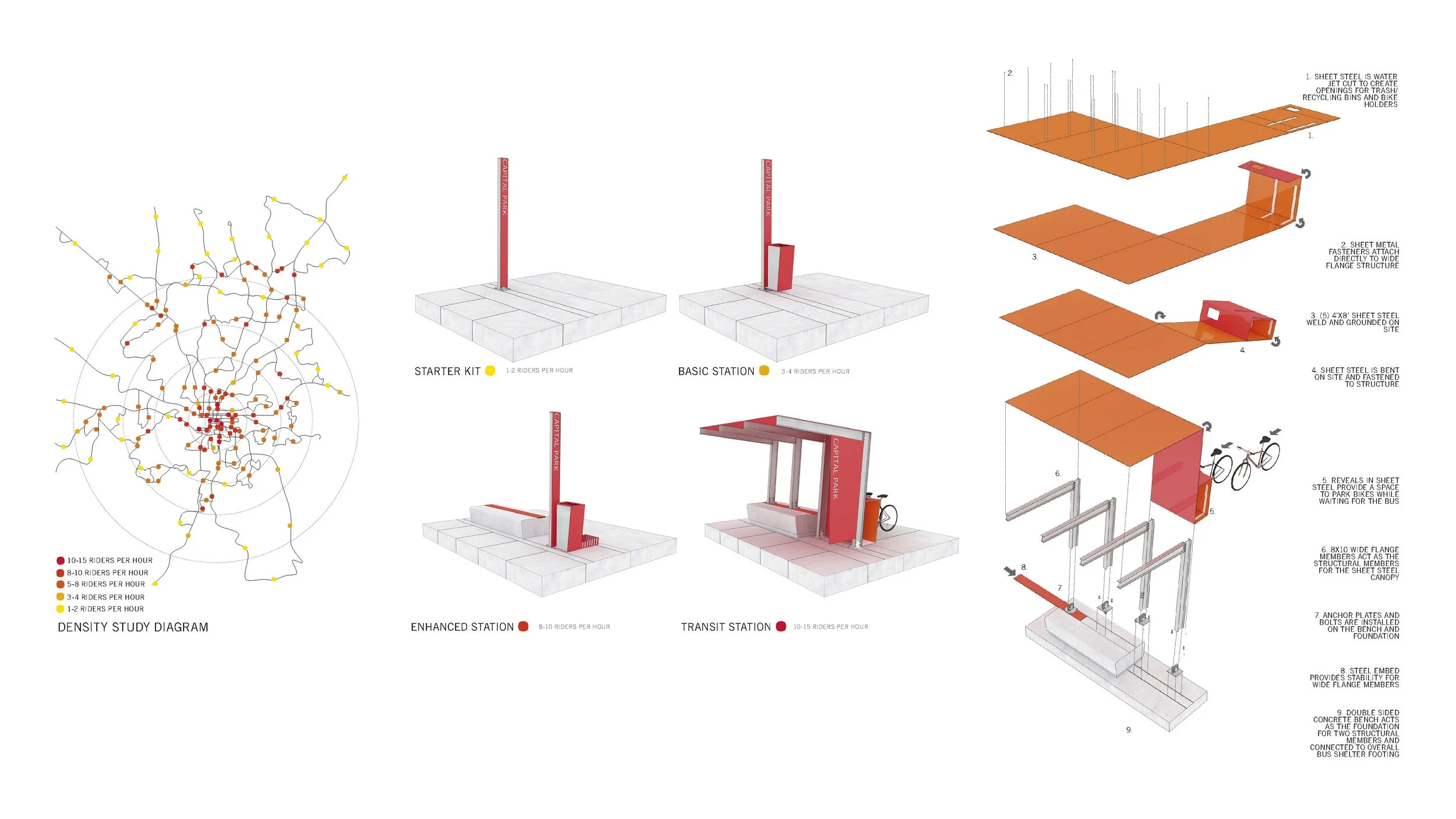
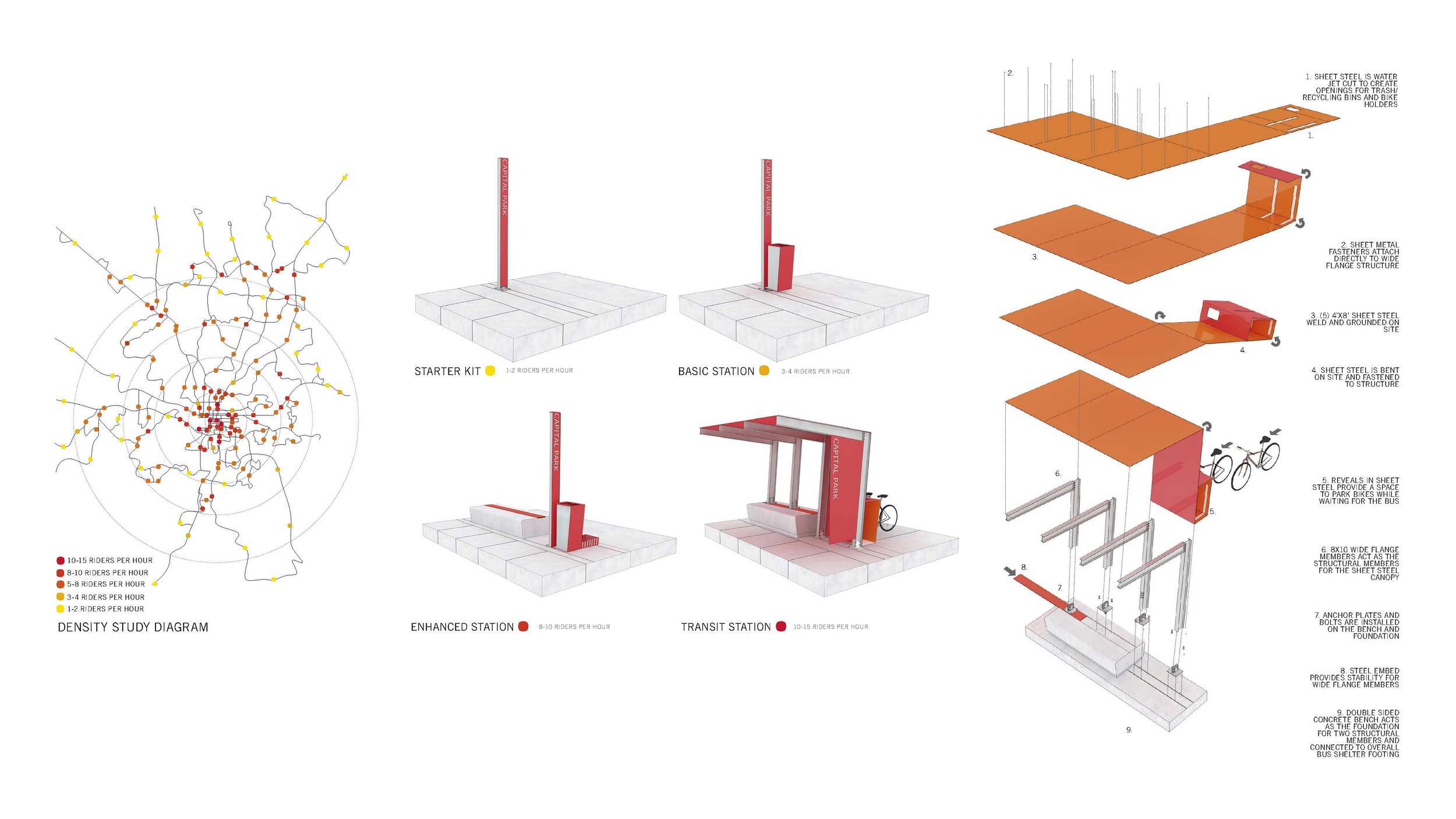
Due to a range of ridership levels throughout the GoRaleigh service area, the design of a prototypical bus shelter also calls for the design of complementary components that further serve the city’s transportation and infrastructure needs. This proposed bus shelter design addresses the need for flexibility and modularity in the form of a collection of components that are able to be assembled as varying levels of ridership place varying programmatic demands on each bus stop. Whether the demands of each stop call for a basic stop, enhanced stop, or a full transit station the full suite of components are able to be reconfigured while maintaining a consistent overall aesthetic.
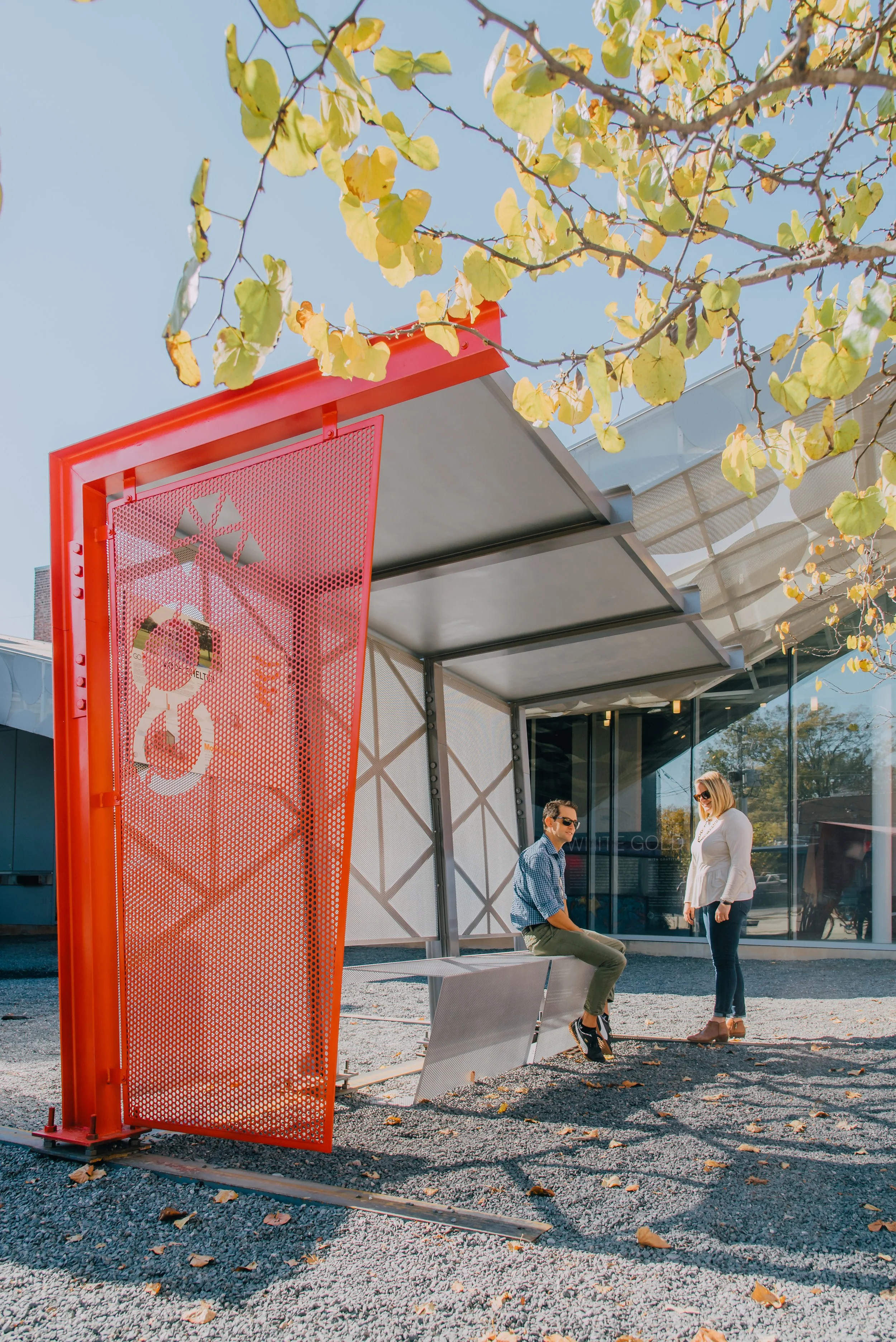
The basic stop provides riders with clear, illuminated signage and waste/recycling disposal as well as an optional bicycle storage component. The enhanced stop builds upon the basic stop with the addition of a concrete bench, providing permanent, easily maintained seating. For stops with the highest ridership rates, the transit station offers riders the full array of amenities, with seating, waste/recycling disposal as well as a steel canopy structure for shade and protection from driving rains. As ridership levels fluctuate in coming years, each stop has the potential to be altered based on the components used so that the various stops continue to serve riders in the most efficient manner possible.
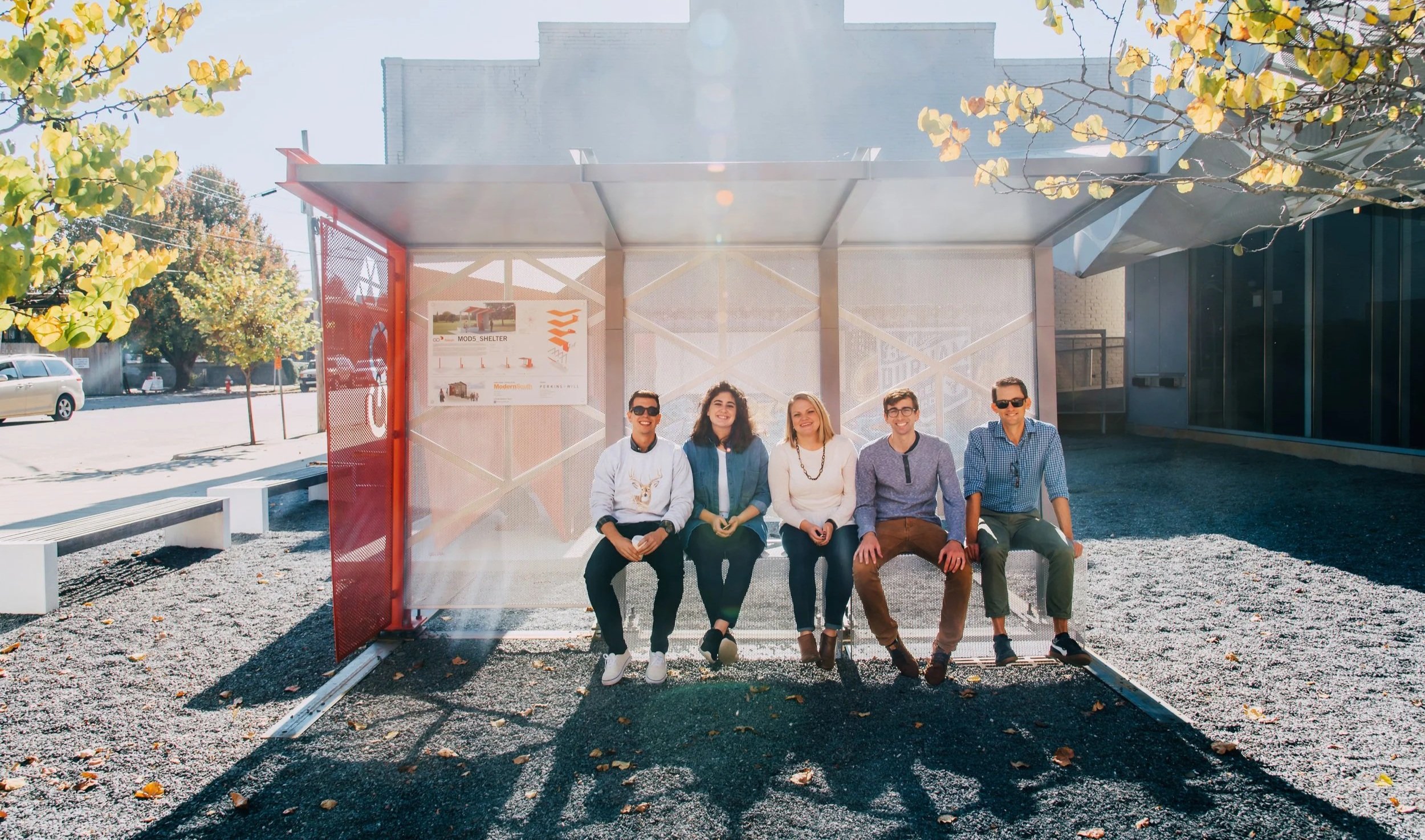
Design Team:
Christopher Garris, Liz Richardson, Scott Hefner, Ian Zapata, Idil Kantarci